
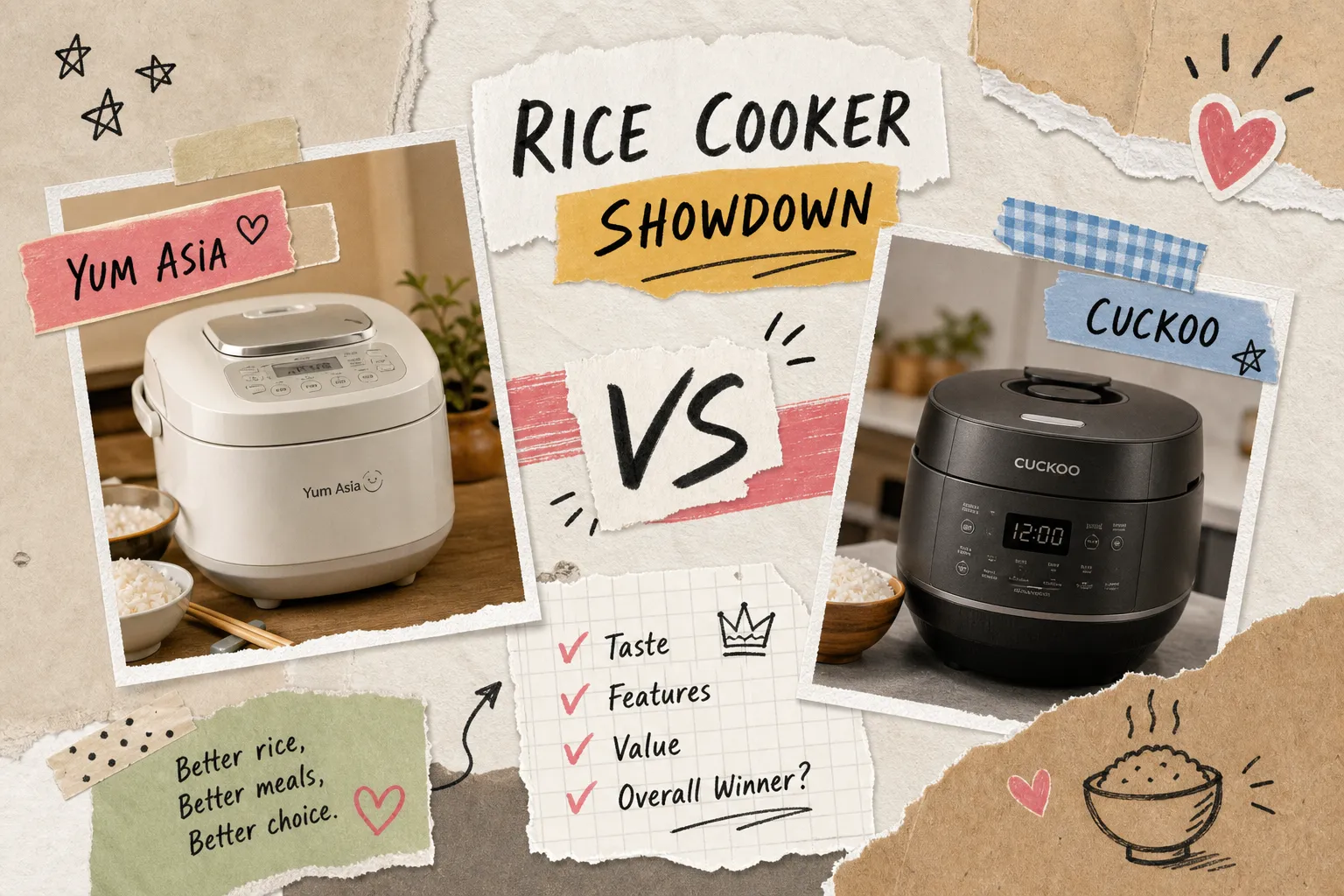
Yum Asia vs Cuckoo, if you’ve already ruled out the basic $30 rice cooker and want a straight answer, here it is: these two brands are built around genuinely different cooking philosophies, and the right pick depends entirely on what you actually cook. This comparison covers build quality, real-world rice performance, cooking technology, and price, drawing on hands-on research and verified spec data so you can buy with confidence.
Two brands, two very different approaches to cooking rice
What Yum Asia actually is
Yum Asia is a UK-based brand that has expanded into the US market with 120V-compatible models designed specifically for American kitchens. It’s a premium niche player, not a mass-market appliance brand, and every product it makes is built around one core idea: texture-first rice cooking. The Yum Asia Panda Mini is the brand’s US entry point at $99.90, sized for one to three people and optimized for short-grain white and sushi rice. It doesn’t advertise the way larger brands do, which is why many American home cooks haven’t come across it yet. Its standing is built on results in the bowl rather than shelf presence.
Cuckoo’s standing as Korea’s most recognized rice cooker brand
Cuckoo is far more widely available in the US and carries a recognizable name among serious home cooks. Its roots are in Korean home cooking culture, which shapes how its machines are tuned: firmer grain texture, faster cook times, and a lineup that scales from budget-friendly models to high-end pressure induction heating systems. Cuckoo’s broader model range means it serves more buying profiles, but that range also means the performance gap between its entry and premium tiers is significant.
Why this comparison matters for US buyers
Both brands attract buyers who want something that genuinely improves rice quality. The overlap in audience is real; the overlap in performance is not. This Yum Asia vs Cuckoo comparison goes beyond spec sheets to cover what actually matters: how the rice tastes and feels when you sit down to eat it.
Yum Asia vs Cuckoo: build quality and design
Yum Asia’s compact, European-influenced build
The Panda Mini and Yum Asia’s broader lineup share a design philosophy: compact, cleanly finished, and built for smaller countertops. The controls are minimal and intuitive, and the overall aesthetic fits modern kitchen setups without looking like a commercial appliance. Yum Asia pays attention to materials even at its entry price point. According to the brand’s product specifications, the inner bowl uses a ceramic-style coating described as highly durable with proper care. One reassuring pattern in user reports: when defects do occur, they tend to surface within the first few months rather than after a year of daily use, a sign of consistent manufacturing rather than slow material breakdown.
Cuckoo’s heavier-duty, feature-packed construction
Cuckoo machines have a more substantial physical presence. Higher-end models feature pressure-seal lids, thicker construction, and control panels that reflect a wider range of cooking programs. A Cuckoo feels more like a full-featured appliance, solid, slightly larger, and clearly built for high-volume households. For families that cook rice twice a day, the heavier build matches the workload.
Inner bowl and long-term durability: a practical look
Inner bowl coating is one of the most common long-term failure points in any rice cooker, and both brands handle it differently. Yum Asia’s ceramic-coated bowls are designed to last for years with proper care, and user reports back that up for daily users who follow the cleaning guidelines. Some user discussions raise concerns about wear on Cuckoo inner bowls, particularly from metal utensils or rough handling, though independent long-term comparative data is limited. Based on available user feedback at similar use levels, Yum Asia’s coating appears to hold up somewhat better, but both brands will perform well if you treat the bowl with care.
Real-world cooking results across different rice types
Where the Yum Asia Panda consistently wins: white rice and sushi rice
Testing consistently shows the Panda producing what reviewers describe as “very consistent pot to pot” results on short-grain white rice: clear grain separation, moist texture, and soft but not mushy results. For sushi rice specifically, IH combined with fuzzy logic delivers a meaningful edge, managing both moisture and temperature precisely across the full cook cycle. This is where the Yum Asia Panda earns its reputation. If your household primarily eats Japanese-style rice, it’s the stronger performer in this comparison.
Brown rice and specialty grains: Cuckoo’s stronger suit
Testing shows Cuckoo handling brown rice exceptionally well, and the reason makes sense: its pressure-assisted models raise the boiling point, forcing moisture into tougher bran layers faster and more thoroughly than standard IH cooking can. For households that rotate between white rice and brown rice regularly, this is a genuine advantage. Cuckoo’s multi-grain performance is consistently strong, and that flexibility matters for anyone who doesn’t eat the same rice variety every day.
The speed trade-off: Cuckoo is faster, but at what cost?
Cuckoo cooks 4 cups of white rice in roughly 30 minutes, fast by any standard, based on user-reported results across multiple models. Yum Asia runs at a more moderate pace that prioritizes controlled heat distribution over cycle speed. For most home cooks, the timing difference doesn’t affect the dinner schedule. But for households cooking rice twice daily or feeding larger groups, Cuckoo’s speed is a practical advantage worth factoring into your decision.
Yum Asia vs Cuckoo: the technology inside each machine
Yum Asia’s IH and fuzzy logic lineup: which models have what
Yum Asia offers three induction heating models in the US: the Hotaru, the Fuji, and the Bamboo. The Bamboo is the top of the range, combining IH with advanced fuzzy logic for the most refined control over each cook cycle. The Panda Mini is the brand’s entry-level US model at $99.90, ideal for one to three people. Yum Asia does not offer pressure cooking; its approach is pure IH and fuzzy logic precision, tuned for texture rather than speed. The Bamboo also includes a “Yumami” setting, which reviewers describe as producing rice that’s slightly sweeter with a noticeably lighter texture.
Cuckoo’s pressure cooker advantage and what it means for rice
Cuckoo’s pressure IH models work by pressurizing the cooking chamber, which raises the boiling point and forces moisture into each grain faster than standard heat alone can achieve. The result is firmer, springier rice with a shorter cook time. That texture, firm and springy, is characteristic of Korean-style short-grain. This is a genuine technical advantage for certain cooking styles, but it does push the result away from the softer Japanese-style texture that many US home cooks prefer. Knowing which texture you want is the most important factor in this decision.
Matching the right technology to how you actually cook
If you eat mostly white rice or sushi rice and texture is your priority, IH with fuzzy logic is the better fit, and Yum Asia executes it best at this price range. If you cook a variety of grains, need faster results, and prefer the firmer texture associated with Korean-style rice, Cuckoo’s pressure IH earns its spot. The fuzzy logic versus pressure IH distinction isn’t just marketing language; it produces genuinely different outcomes in the bowl, and both approaches have real strengths.
Price, value, and after-sales support
Where each brand sits on the price spectrum
The Yum Asia Panda Mini starts at $99.90, making it one of the more accessible IH rice cookers on the US market. Yum Asia’s IH models step up from there, with the Bamboo at the premium end of the lineup. Cuckoo’s range in the US spans from more affordable non-pressure models to pressure IH models such as the CRP-P0609S, priced around $243 to $270 depending on the seller. At comparable price points, both brands are targeting slightly different buyers: Yum Asia leans compact and texture-focused; Cuckoo offers more volume and versatility.
Warranty coverage and US customer support
Cuckoo offers a one-year limited warranty on most US models, with documented service centers in Cerritos, CA; Los Angeles, CA; and Carrollton, TX. Support phone and email contacts are publicly listed, and they offer mail-in repair for customers outside service-center regions. One practical caveat: Cuckoo’s affiliated service center warranty may not apply to units purchased through third-party Amazon sellers, so buying directly from Cuckoo’s official US channel matters. Yum Asia provides direct customer support through its US help pages, with a stated typical response time of around six hours, seven days a week. Both brands have accessible warranty and support options, just verify the exact terms before purchasing, especially through a marketplace.
Amazon availability and where to buy each model
Both brands are available on Amazon.com with current US pricing. Kitchen Seen maintains affiliate links to both the Yum Asia Panda and key Cuckoo models so you can check live pricing and availability without hunting through multiple tabs, a straightforward path from review to purchase. For a broader buyer’s overview and additional brand comparisons, see this best rice cooker guide for context on how these models stack up against other top picks.
Which rice cooker actually belongs in your kitchen
Buy Yum Asia if texture and sushi rice are your priority
The Yum Asia buyer is cooking for one to three people, eating Japanese-style or sushi rice most of the time, and values a soft, consistent texture over raw speed. The compact design fits smaller countertops without sacrificing performance. Start with the Panda Mini at $99.90. If you want the full IH plus advanced fuzzy logic experience, the Bamboo is the upgrade worth considering.
Buy Cuckoo if you need speed, variety, and Korean-style results
The Cuckoo buyer is feeding a household that eats rice daily, cooks a mix of white, brown, and multi-grain varieties, and prefers the firmer, springier texture of Korean-style short-grain. Speed, volume, and versatility all factor into the decision. The pressure IH models are Cuckoo’s standout products in the US (see our Cuckoo Crp-P0609s vs Tiger Jbv-A10u Comparison The Real Difference), and the CRP-P0609S is the model most consistently recommended for households that want pressure-cooking performance.
The bottom line: Yum Asia vs Cuckoo
For most US home cooks who want the best possible white rice and sushi rice in a compact package, the Yum Asia Panda is the stronger choice. It produces more consistent results on the rice types most American households cook most often, at a price that’s hard to argue with. For households that cook high volume, rotate through grain varieties, and need faster turnaround, Cuckoo earns the win. Both are excellent machines. The difference is which one is excellent for your kitchen.
Your rice, your call
In the Yum Asia vs Cuckoo matchup, the core difference isn’t quality, it’s philosophy. Yum Asia is built for texture precision on white and sushi rice. Cuckoo is built for speed, versatility, and Korean-style results across a wider range of grains. Once you know which of those describes your kitchen, the choice isn’t close.
Check both models on Amazon through Kitchen Seen’s links for current pricing. If you’re still weighing your options, the site’s Zojirushi comparisons, including Aroma vs Zojirushi Rice Cooker: The Ultimate Head-to-Head Comparison and Panasonic vs Zojirushi Rice Cooker: Which One Belongs in Your Kitchen?, cover other major head-to-heads for anyone deciding between premium rice cooker brands.

MD Belal is the founder and chief reviewer of KitchenSeen.com. He provides accurate information by thoroughly analyzing and comparing various types of kitchen tools and appliances. Through years of cooking experience and rigorous testing, he explains complex aspects of products in a simple way so that ordinary cooks can easily make the right decision. His main goal is to help you choose the best thing for your kitchen.