
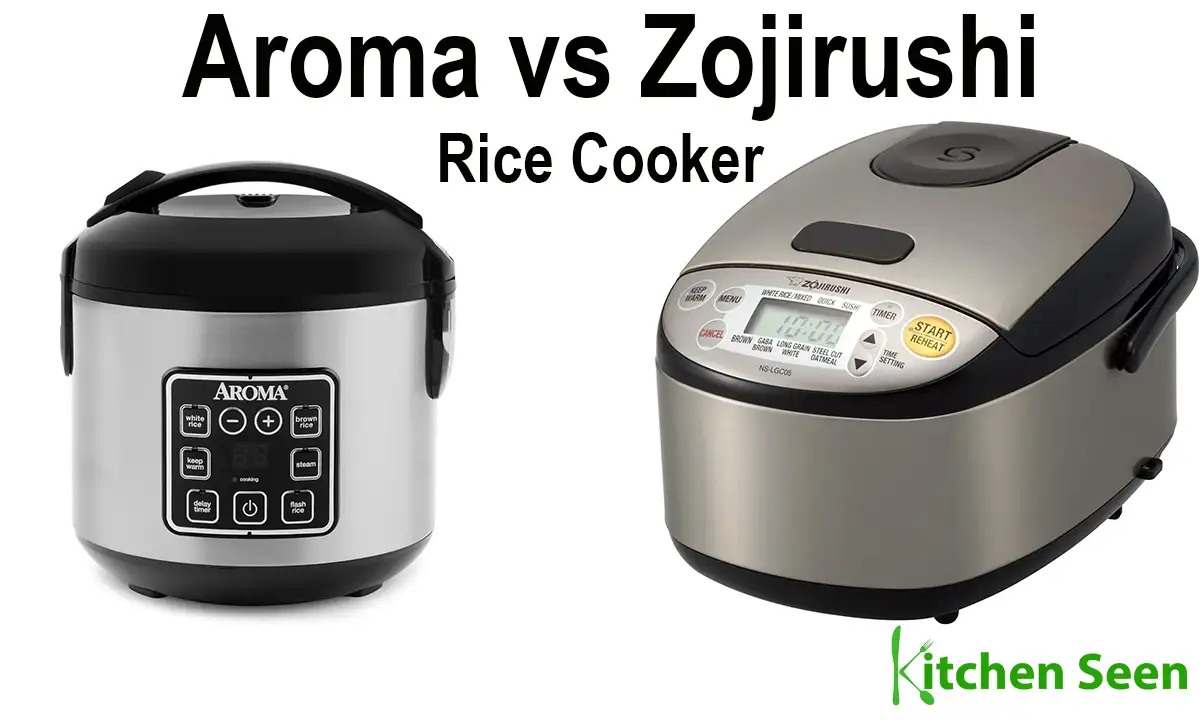
Top Pick Overall: Zojirushi Rice Cooker. [See Current Price on Amazon]
Best Value for Beginners: Aroma Rice Cooker. [Check Amazon Deal]
The Perfectionist’s Choice (For Daily Use): Zojirushi Rice Cooker. [View Price on Amazon]
Few kitchen debates spark as much passion as choosing a rice cooker. On one side, you have the wildly popular, budget-friendly Aroma multicookers sitting on millions of kitchen counters. On the other, the legendary, premium Zojirushi machines hailed by perfectionists as the holy grail of grain cookery.
I have spent months using both brands in my kitchen, testing them with everything from delicate jasmine rice to stubborn brown grains and even full one-pot meals. If you are struggling to decide whether to save your cash with an Aroma or invest heavily in a Zojirushi, you are in the right place. Let’s break down how they actually perform in the real world.
Quick Verdict
If you want flawless, restaurant-quality rice every single time and cook grains multiple times a week, buy the Zojirushi. Its advanced microcomputer adjustments make it entirely foolproof. However, if you are on a budget, need dinner made quickly, or want a machine that doubles as a steamer and slow cooker, the Aroma is the undisputed champion of value.
Overview: Summary Comparison Table
| Feature | Aroma Rice Cookers (e.g., ARC-914SBD) | Zojirushi Rice Cookers (e.g., NS-ZCC10) |
| Primary Appeal | Budget-friendly & Multipurpose | Elite grain texture & Longevity |
| Core Technology | Conventional Heat / Simple Sensor Logic | Neuro Fuzzy Logic / Induction Heating |
| Price Range | $30 – $80 | $150 – $400+ |
| Cooking Speed | Fast (approx. 20–30 mins for white rice) | Slow (approx. 40–50 mins for white rice) |
| Versatility | High (Steams, Sauté-then-Simmer, Slow Cook) | Focused (Perfects multiple grain types, Porridge) |
| Country of Origin | China | Japan (Premium models) / China |
Deep-Dive Comparison Rounds
Rice Quality & Texture
The heart of any rice cooker is the final texture of the grain. To test this, I ran identical batches of standard long-grain white rice and tough short-grain brown rice through both machines.
| Metric | Aroma Performance | Zojirushi Performance |
| White Rice Texture | Fluffy, but occasionally has a dry or slightly crusty bottom. | Consistently pristine; perfectly plump, distinct grains with ideal stickiness. |
| Brown Rice Texture | Edible, but can remain slightly chewy or unevenly cooked. | Fully bloomed, tender, and remarkably soft without being mushy. |
| Heating Method | Traditional bottom heating plate. | 3D Spherical heating with microcomputer real-time adjustments. |
The Aroma relies on a traditional heating element at the bottom of the machine. It boils water fast, but once the liquid is absorbed, it shuts off based on raw temperature changes. This can leave you with a slightly scorched or dry bottom layer.
Zojirushi uses Neuro Fuzzy logic technology, meaning the machine literally “thinks” for itself. It tracks ambient room temperatures and monitors the moisture levels inside the spherical inner pan, micro-adjusting the heat hundreds of times throughout the cycle. The result is sweet, perfectly uniform rice from the top layer to the very bottom.
Round 1 Winner: Zojirushi (By a landslide if texture is your top priority)
Versatility & Multifunctionality
Many modern home cooks don’t just want a single-use appliance taking up precious counter space. Here is how they stack up when tasked with more than just basic boiling.
| Feature / Setting | Aroma Capabilities | Zojirushi Capabilities |
| Steaming Basket | Included (BPA-free tray allows meat/veggies to steam while rice cooks). | Rarely included / Limited to specific “Steam” designated models. |
| Sauté Function | Yes (Sauté-then-Simmer STS® technology). | No. |
| Slow Cooking | High capability (Functions seamlessly as a 2-to-4-quart slow cooker). | Limited (Only available on specific premium multi-cooker variants). |
| Baking/Cake Modes | Basic or none. | Excellent (Precision heat creates beautifully uniform sponge cakes). |
My Aroma model is an absolute workhorse for weekday meal prep. Thanks to its Sauté-then-Simmer function, I can brown onions and sear chicken right inside the pot, drop in rice and broth, and let the machine automatically switch over to simmer mode. The inclusion of a steaming basket means your vegetables can cook up top via rising steam while your grain cooks below.
Zojirushi focuses almost entirely on being a master chef for grains. It features brilliant, ultra-specific presets for sushi rice, sweet rice, porridge, and GABA brown rice, but it does not want you throwing raw chicken or chilis into its delicate ecosystem for a slow cook.
Round 2 Winner: Aroma (The ultimate budget-friendly multicooker)
Speed & Everyday Convenience
When you get home from a long day at work, every minute counts. Let’s look at how user-friendly and efficient these machines are on a daily basis.
| Convenience Metric | Aroma Models | Zojirushi Models |
| White Rice Cook Time | 20 to 25 minutes | 40 to 50 minutes |
| Flash / Quick Mode | Yes (Drops cook time down to ~15 minutes) | Yes (Still takes ~30 minutes) |
| Power Cord | Standard detachable or attached cord | Premium built-in retractable power cord |
| Keep Warm Duration | 12 hours (Can dry out rice after 3–4 hours) | 12 to 24+ hours (Extended Warm keeps rice pristine for days) |
Zojirushi takes its time because it factors in an automated soaking and cooling period directly into the cycle to maximize grain sweetness. However, waiting nearly 50 minutes for a basic batch of white rice can test your patience on a busy Tuesday night.
Aroma is lightning fast. It gets the water boiling immediately and delivers dinner in under half an hour. Furthermore, cleaning the Aroma is incredibly simple, though the Zojirushi claws back points with a beautifully sleek design, a completely detachable inner lid for deep washing, and a genius retractable power cord that makes storage a dream.
Round 3 Winner: Tie (Aroma wins on raw speed; Zojirushi wins on storage design and unmatched long-term “Keep Warm” capabilities)
My Personal Cooking Story
I will never forget the evening I truly understood the hype surrounding the Zojirushi. I had invited my family over for a homemade sushi night. In the past, using my trusty old Aroma, making sushi rice was always a bit of a gamble. I had to monitor the pot carefully, wash the grains multiple times, and still occasionally ended up with a slightly gummy texture that wouldn’t hold together properly on the seaweed sheets.
That night, I rinsed some short-grain Calrose rice, added water precisely to the “Sushi Rice” etched line inside the Zojirushi pan, and pressed start. I completely forgot about it for an hour while preparing the fish. When the machine played its signature little musical chime to signal it was finished, I opened the lid to find absolute perfection. Every single grain had a gorgeous, glossy sheen. It held the seasoned rice vinegar beautifully, sticky enough to roll easily but with a distinct bite to every individual grain.
That said, my Aroma still has a permanent place in my heart—and my pantry. On frantic weeknights when my kids are starving and I need a quick batch of jasmine rice alongside some steamed broccoli, the Aroma gets the job done in twenty minutes flat while keeping cleanup to a single pot.
Pros & Cons
Aroma Rice Cookers
- Pros:
- Incredibly affordable, making it accessible for students and budget-conscious families.
- Lightning-fast cooking speeds with a dedicated “Flash Rice” function.
- Functions beautifully as a steamer and slow cooker, saving counter space.
- Simple, intuitive user interface that anyone can master in seconds.
- Cons:
- The nonstick inner coating can begin to scratch or peel after a year or two of heavy use.
- Rice left on the “Keep Warm” setting for more than a few hours dries out and gets crusty around the bottom edges.
Zojirushi Rice Cookers
- Pros:
- Unrivaled rice quality; cooks every variety of grain to absolute perfection.
- Legendary Japanese build quality—these machines regularly last for ten to fifteen years.
- Advanced Neuro Fuzzy microcomputer prevents boiling over or burning completely.
- Extended “Keep Warm” cycle keeps rice fresh, moist, and hot for over twenty-four hours.
- Cons:
- A massive upfront financial investment that might not make sense for occasional rice eaters.
- Much slower standard cooking cycles compared to conventional cookers.
Which Should You Buy?
Your choice comes down to your personal lifestyle, budget, and how you view rice in your daily diet:
- Buy the Aroma if: You are looking for a highly affordable appliance that can steam veggies, cook a quick weeknight side dish, or simmer a soup. It is the ideal companion for busy parents, college dorm rooms, and casual cooks who prioritize speed and low cost over culinary perfection.
- Buy the Zojirushi if: Rice is a staple food in your household that you eat multiple times a week. If you are a perfectionist who can taste the difference between decent rice and flawless, restaurant-grade grains, the investment is worth every single penny. It is a “buy it for life” kitchen cornerstone.
FAQ Section Answer by Kitchenseen.com
Why does the Zojirushi take so much longer to cook rice than the Aroma?
The Zojirushi utilizes a microcomputer to run a precise, multi-stage cooking cycle. This includes a dedicated pre-soaking period to allow moisture to penetrate to the very core of the grain, a gradual heating phase, and a precise cooling/steaming period at the end. The Aroma simply applies raw heat immediately to bring the water to a rapid boil, which saves time but reduces overall texture quality.
Can I cook alternative grains like quinoa or oatmeal in these machines?
Yes, both brands handle alternative grains well. The Aroma has simple presets or can be operated using its standard white rice mode for quinoa. Premium Zojirushi cookers feature hyper-specific digital settings for steel-cut oatmeal, porridge, and multigrains, ensuring they never boil over or become slimy.
Are the inner pots dishwasher safe?
While Aroma states that many of their inner pots are dishwasher safe, I highly recommend hand-washing the inner pans of both brands. Dishwasher detergents are highly abrasive and will prematurely degrade the nonstick coatings, reducing the lifespan of your cooker.
Is a Zojirushi rice cooker really worth the high price tag?
For a casual cook who makes white rice once every two weeks, no. However, for households that eat rice daily or cook complex grains like brown rice, wild rice, or sushi rice, it absolutely is. The flawless texture consistency and the fact that the machine can last for over a decade make the cost-per-use incredibly low over time.
Disclaimer: KitchenSeen is a participant in the Amazon Services LLC Associates Program. As an Amazon Associate, we earn a small commission from qualifying purchases at absolutely no extra cost to you. Our team spends countless hours rigorously testing and researching kitchen gear to ensure you get the absolute best recommendations. Your support fuels our passion and keeps our kitchen running. Thank you!

MD Belal is the founder and chief reviewer of KitchenSeen.com. He provides accurate information by thoroughly analyzing and comparing various types of kitchen tools and appliances. Through years of cooking experience and rigorous testing, he explains complex aspects of products in a simple way so that ordinary cooks can easily make the right decision. His main goal is to help you choose the best thing for your kitchen.