
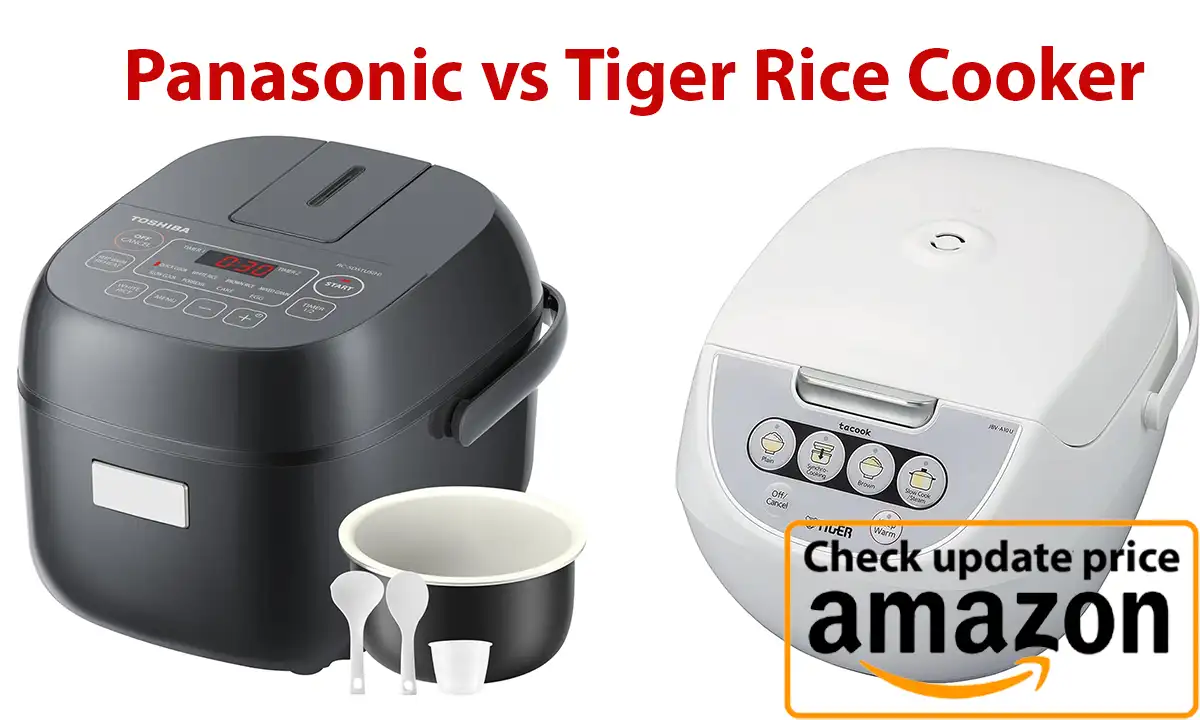
Two different philosophies collide right in your kitchen. Choosing between a Panasonic and a Tiger rice cooker is a tough call. Panasonic keeps things very simple and quiet. Tiger wants to do more than just make rice. It wants to cook your whole dinner at the same time.
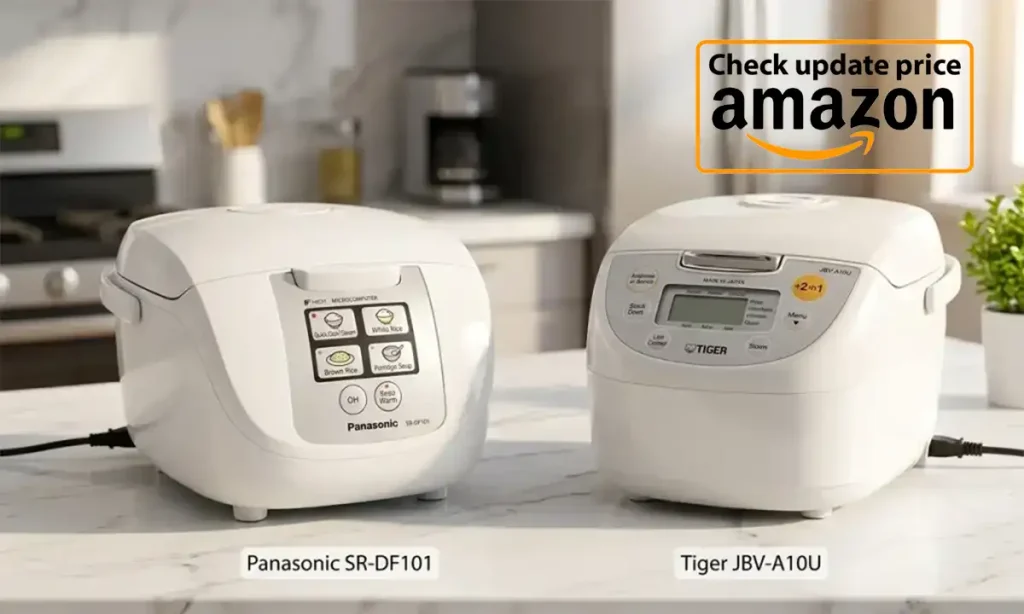
Testing happened right in my own US kitchen. I lived with both the Panasonic SR-DF101 and the Tiger JBV-A10U. Both are old Japanese brands. Massive, loyal followings exist for both in the States. Months of scooping rice from both machines revealed the truth. They serve very different lifestyles.
Let’s break down the real world performance right now.
Which One Is For You?
If you are in a hurry, here is the short answer based on my daily testing:
| If You Want… | Your Best Match Is… | Why? |
|---|---|---|
| Zero-fuss, quick white rice on a budget | Panasonic SR-DF101 | One-touch operation, faster cooking, and easier to clean. |
| One-pot meals, premium durability, and delay timers | Tiger JBV-A10U | Features the Tacook synchro-plate, multi-cooking modes, and a sturdier build. |
Rice Taste and Texture: The Ultimate Showdown
At the end of the day, a rice cooker has to make great rice. Here is how they stack up across different grains:
| Aspect | Panasonic SR-DF101 | Tiger JBV-A10U |
|---|---|---|
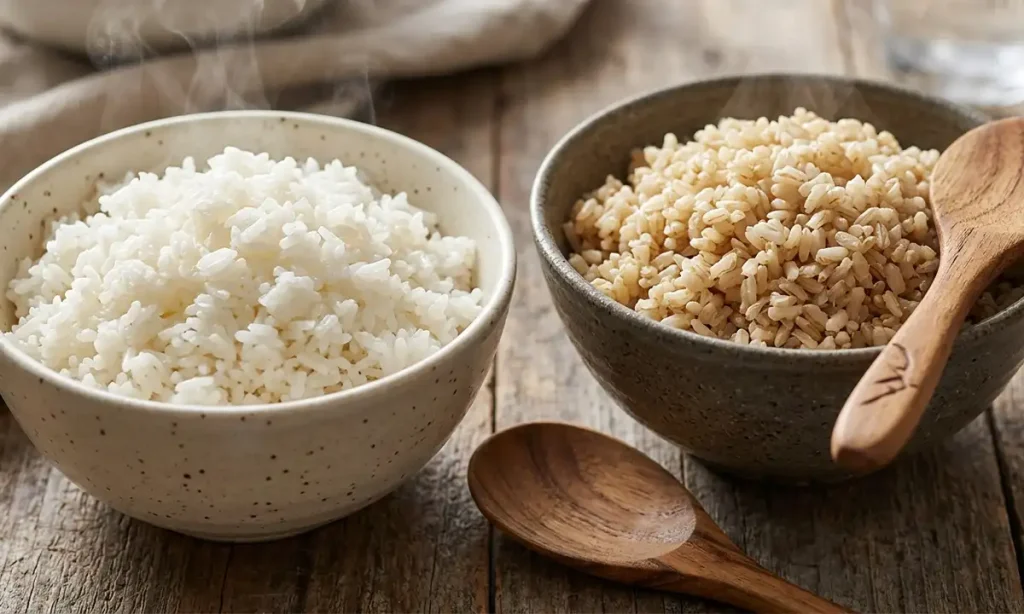
| Fluffy White Rice | Yes, good and consistent | Yes, excellent and distinct grains |
| Brown Rice Texture | Good, but takes time | Very even, never chewy |
| Mixed Grain Performance | Fair to good | Highly consistent |
| Rice Sticking to Pot | Rare (with proper care) | Rare (with proper care) |
| Small Batches (1–2 cups) | Good | Very good, holds moisture well |
| Full Pot Performance | Good | Excellent, even heating |
Winner: Tiger Rice Cooker
Both machines spit out a beautiful bowl of plain white jasmine rice. However, Tiger takes the crown when it comes to precision. Tiger uses advanced Micom (Microcomputer) technology that constantly adjusts the temperature down to the second. This results in a slightly more even texture, especially with stubborn grains like brown rice and mixed wild rice.
Panasonic uses Fuzzy Logic technology, which is also smart and makes great white rice with zero effort. If you mostly eat plain white rice, you will be thrilled with the Panasonic. But if you are a texture perfectionist, Tiger is the safer bet.
Cooking Speed and Daily Convenience
How do these machines fit into a chaotic weeknight schedule?
| Aspect | Panasonic SR-DF101 | Tiger JBV-A10U |
|---|---|---|
| White Rice Cook Time | About 30–38 minutes | About 35–50 minutes |
| Quick Cook Option | Yes (Dedicated Quick mode) | No true independent quick mode |
| Brown Rice Cook Time | Long (can near 2 hours) | Long, but steady and automated |
| One-Touch Start | Yes | Yes |
| Late-Night Ease | Incredibly simple | Simple, but requires a few menu clicks |
| “Set and Forget” Feeling | Strong | Strong (once you know the menu) |
Winner: Panasonic Rice Cooker
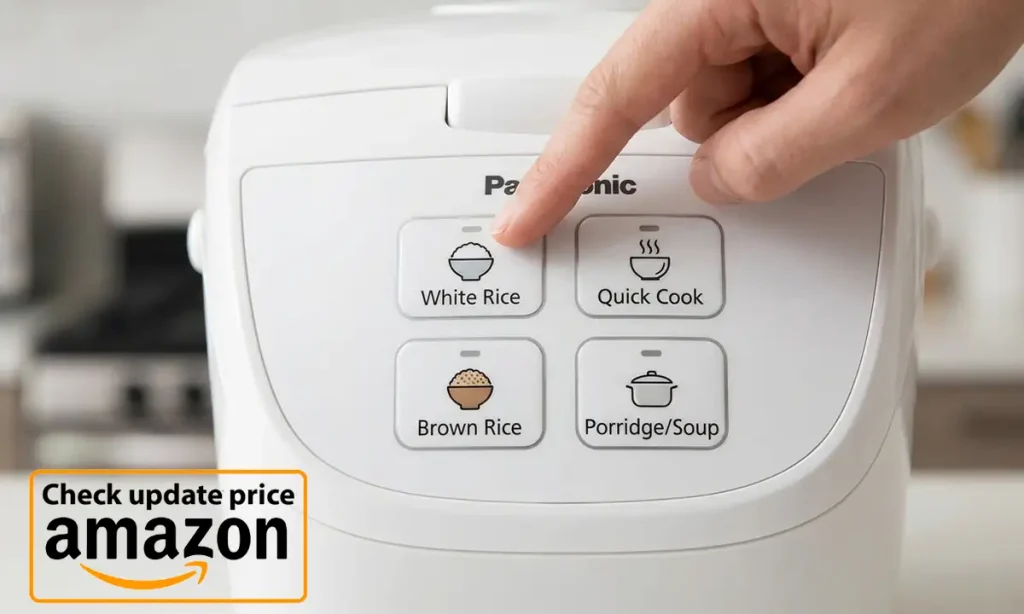
Stumbling into the kitchen at 7 PM exhausted makes the Panasonic feel like a kind friend. White rice lands on your plate in just over 30 minutes thanks to a special Quick Cook mode.
Tiger acts like a bit of a slow-poke by comparison. Lacking a true independent quick-cook button, the standard cycle takes up to 50 minutes. Extra time goes to soaking for better texture. Panasonic wins hands down for pure speed and zero brainpower.
Versatility and Cooking Modes (Beyond Just Rice)
Can these machines handle more than just your side dishes?
| Aspect | Panasonic SR-DF101 | Tiger JBV-A10U |
|---|---|---|
| White & Brown Rice Presets | Yes | Yes |
| Soup or Porridge Mode | Yes (Direct mode) | No direct mode |
| Steam Function | Yes (Basic basket included) | Yes (Using specialized Tacook tray) |
| Slow Cook Mode | Very limited | Yes, a legitimate slow cooker |
| One-Pot Meal Option | Basic steaming only | Yes (Tacook Synchro-Cooking) |
Winner: Tiger Rice Cooker
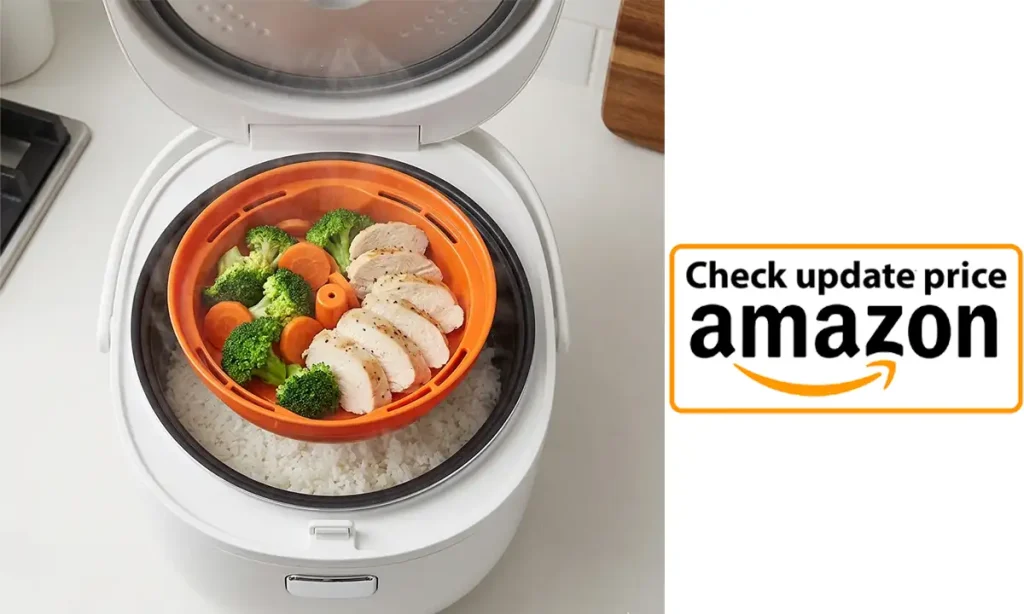
Tiger JBV-A10U completely runs away with the competition here. Features include Tiger’s patented Tacook synchro-cooking plate. Sitting above the cooking rice is this special BPA-free tray. Steam from the rice cooks your protein and veggies inside the tray. Flavors do not drip downward into your rice.
Panasonic handles basic steaming and soups brilliantly. Missing from the machine is a true multi-cooker function. Tiger opens doors that Panasonic cannot if you want one tool to cook your whole dinner at the same time.
Keep Warm and Leftover Rice
| Aspect | Panasonic SR-DF101 | Tiger JBV-A10U |
|---|---|---|
| Basic Keep Warm Hold | About 5 hours | Up to 12 hours |
| Suitable for All-Day Hold | Not recommended | Yes, more stable |
| Short-Hold Moisture | Stays soft and fluffy | Stays good |
| Long-Hold Drying Risk | Medium (can crisp at bottom) | Medium to High (edges can dry) |
| Easy Same-Day Reheat | Yes | Yes |
Winner: Panasonic for Short Holds; Tiger for Long Holds
If you just need your rice to stay perfect for a few hours until the family sits down for dinner, Panasonic’s 5-hour window is perfect. It keeps the rice incredibly moist.
Tiger boasts a massive 12-hour keep-warm cycle, which sounds amazing for long workdays. However, in my experience, leaving rice in any Micom cooker all day causes the edges to dry out slightly. Tiger handles the long hold better safely, but don’t expect magic after hour 10.
Build Quality, Durability, and Warranty
Buying a Japanese rice cooker is usually an investment for the next half-decade. How tough are they?
| Aspect | Panasonic SR-DF101 | Tiger JBV-A10U |
|---|---|---|
| Overall Build Feel | Light, heavy plastic construction | Heftier, more solid countertop presence |
| Inner Pot Material | Fluorine non-stick coating | Aluminum with a tough fluorine coat |
| Scratch Resistance | Good (with nylon/wooden tools) | Good (but prone to peeling if abused) |
| US Warranty & Parts | 1-Year Limited / Fair online parts | 1-Year Limited / Good US customer support |
| Design Origin | Japanese Brand | Japanese Brand (Made in China/Japan depending on batch) |
Winner: Tiger Rice Cooker
The Panasonic is lightweight and very easy to shove into a upper kitchen cabinet when not in use. However, the heavy use of plastic makes it feel a bit budget-friendly.
Tiger feels like a tank on your counter. It has a heavy, solid heft that screams Buy It For Years. Both brands offer a standard 1-year limited warranty in the US, but the general consensus among rice cooker communities is that Tiger’s internal heating elements tend to survive severe daily wear and tear a bit longer.
Ease of Use and Cleaning
Nobody wants an appliance that takes 20 minutes to scrub down after dinner.
| Aspect | Panasonic SR-DF101 | Tiger JBV-A10U |
|---|---|---|
| Button Layout | Four massive, clear buttons | Simple menu keys, small LCD |
| Learning Curve | Near zero | Low (requires one read of the manual) |
| Parts to Wash | Inner pot, inner lid, steam vent | Inner pot, inner lid, steam cap, Tacook tray |
| Small-Sink Friendly | Extremely easy | Okay, but a bit bulkier |
Winner: Panasonic Rice Cooker
I once handed the Panasonic to a family member who had never cooked a cup of rice in their life. They looked at the four massive buttons, pressed “White Rice,” and nailed it on the first try. No manual required.
Cleaning the Panasonic is a breeze because there are fewer loose components. Tiger isn’t difficult to clean, but if you use the Tacook tray, you now have an extra layer of grease/protein to scrub out alongside the rice pot. If you absolutely despise doing dishes, Panasonic is a gift.
Price, Value, and Kitchen Footprint
| Aspect | Panasonic SR-DF101 | Tiger JBV-A10U |
|---|---|---|
| Typical US Price Range | Lower to Mid-range ($) | Mid-range to Premium ($$) |
| Uncooked Rice Capacity | 5 Cups (approx. 1.0 Liters) | 5.5 Cups (approx. 1.0 Liters) |
| Countertop Footprint | Compact, low profile | Slightly taller and bulkier |
| Power Compatibility | 120V (Standard US Outlets) | 120V (Standard US Outlets) |
Winner: Panasonic for Budget; Tiger for Feature-Seekers
In US retail markets, Panasonic consistently undercuts Tiger on price for similar capacities. If your primary goal is cooking straight rice and keeping your hard-earned cash in your wallet, Panasonic offers incredible value. Tiger costs more upfront, but if you utilize that Tacook tray even twice a week, it easily pays for itself by saving you energy costs from your main stovetop.

My Personal Rice-Cooking Story
Bringing the Panasonic SR-DF101 home first happened during a very busy phase of my life. Tiredness hit hard. Fried brains needed easy carbs. Rinsing two cups of jasmine rice came first. Dumping it in and tapping one button followed. Walking away was easy. Fluffy, perfect rice stood ready 35 minutes later. Panasonic became my quiet kitchen companion. Demanding nothing and causing no confusion, the machine just delivered steady results.
Bringing home the Tiger JBV-A10U completely shifted my routine next. Throwing white rice in the bottom started one evening. Slicing up some chicken breast came next. Tossing the meat in soy sauce and ginger happened inside the Tacook tray. Laying the tray on top finished the prep. Walking away to watch TV was all that remained. Chimes went off with my entire dinner done at the exact same moment. Rice sat at the bottom. Perfectly steamed chicken and juices stayed trapped at the top.
Tiger felt like a tiny, automated sous-chef. Extra care was needed not to scratch Tiger’s inner pot coating with metal forks. Changing how I viewed meal prepping came down to sheer convenience.
The Ultimate Pros & Cons
Panasonic SR-DF101
- PRO: Incredibly simple 4-button interface that anyone can master.
- PRO: Faster “Quick Cook” mode for busy weeknights.
- PRO: Lightweight, compact, and highly budget-friendly.
- CON: No delay timer (you cannot program it to start cooking while you are at work).
- CON: Extensive plastic build doesn’t feel premium.
Tiger JBV-A10U
- PRO: Tacook system allows simultaneous rice and main dish cooking.
- PRO: Superior Micom temperature control for perfect brown rice texture.
- PRO: Built-in delay timer and dedicated slow-cook functions.
- CON: More components to wash after a meal.
- CON: Slower standard cooking cycles and higher price tag.
Frequently Asked Questions
Which brand is better for standard white rice in the USA?
Panasonic offers the better value if you only eat white rice. Buying it gets you a cheaper, faster, and easier to clean machine. Tiger makes excellent white rice too. Paying a premium happens anyway for extra features you might not use.
Can I use metal spoons inside the Tiger or Panasonic inner pots?
Absolutely not. Both brands utilize a fluorine non-stick coating. Using the plastic paddles included in the box is a must. Wooden spoons also work to prevent peeling. Avoid other tools to keep the coating safe.
Does the Tiger Tacook tray make the rice taste like the meat on top?
No! The Tacook tray is cleverly designed to prevent juices from dripping down into the rice cooking below, ensuring your rice stays clean and beautifully fragrant.
Do I need a voltage converter for these in US homes?
No. Both models are specifically engineered for the US market and run on standard 120V household outlets.

MD Belal is the founder and chief reviewer of KitchenSeen.com. He provides accurate information by thoroughly analyzing and comparing various types of kitchen tools and appliances. Through years of cooking experience and rigorous testing, he explains complex aspects of products in a simple way so that ordinary cooks can easily make the right decision. His main goal is to help you choose the best thing for your kitchen.