
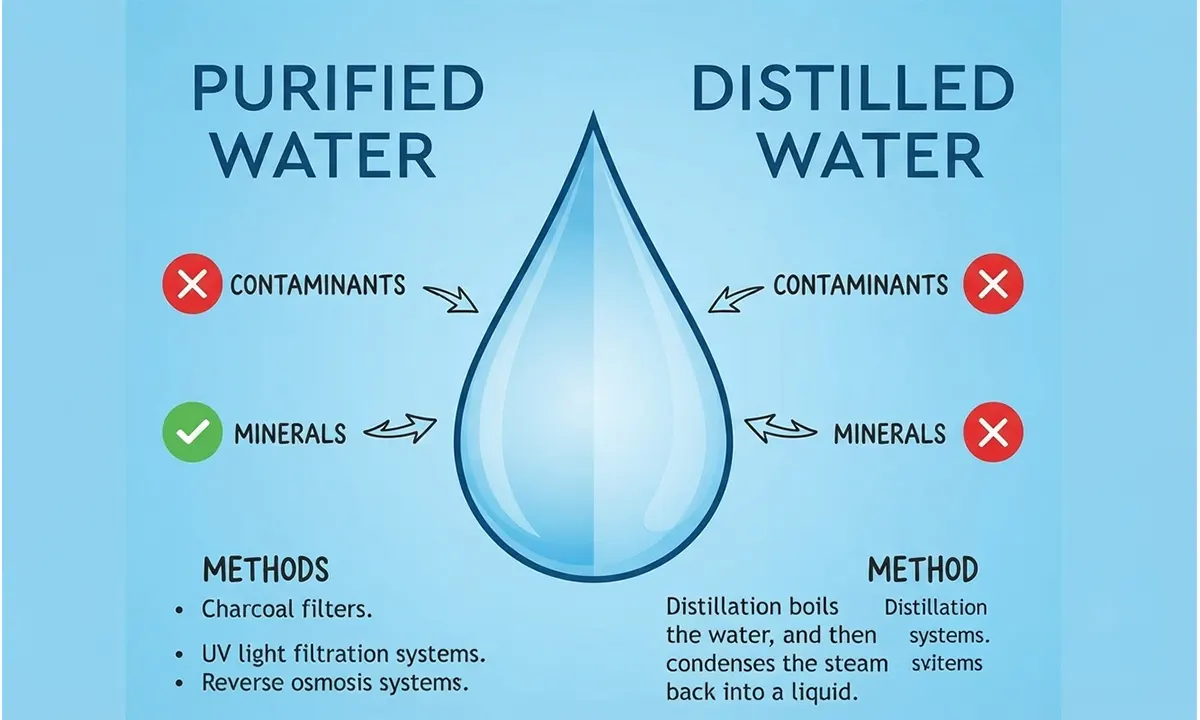
In my years as a home chef and coffee enthusiast, I’ve learned that the secret ingredient isn’t always a rare spice often, it’s the water. Walk down the aisle of any supermarket, and you’ll see bottles of “purified” sitting right next to “distilled.” They look identical, but they behave like night and day in the kitchen.
If you’ve ever wondered why your coffee tastes flat or why your kettle keeps getting those chalky white deposits, this deep dive is for you.
What’s the Best Choice?
- Choose Purified Water for daily drinking, cooking, and brewing coffee where you want a clean taste that still has some body.
- Choose Distilled Water if you need to protect high-end espresso machines from scale, use CPAP machines, or require a neutral base for precise scientific or culinary experiments.
Purified vs Distilled Water Comparison Table
| Feature | Purified Water | Distilled Water |
| Purity | Very High | Highest (Near Zero TDS) |
| Minerals | Often Retained/Adjusted | Completely Removed |
| Best For | Drinking, Coffee, Cooking | Appliances, Medical, Lab Use |
| Taste | Clean & Balanced | Flat/Bland |
The Production Process
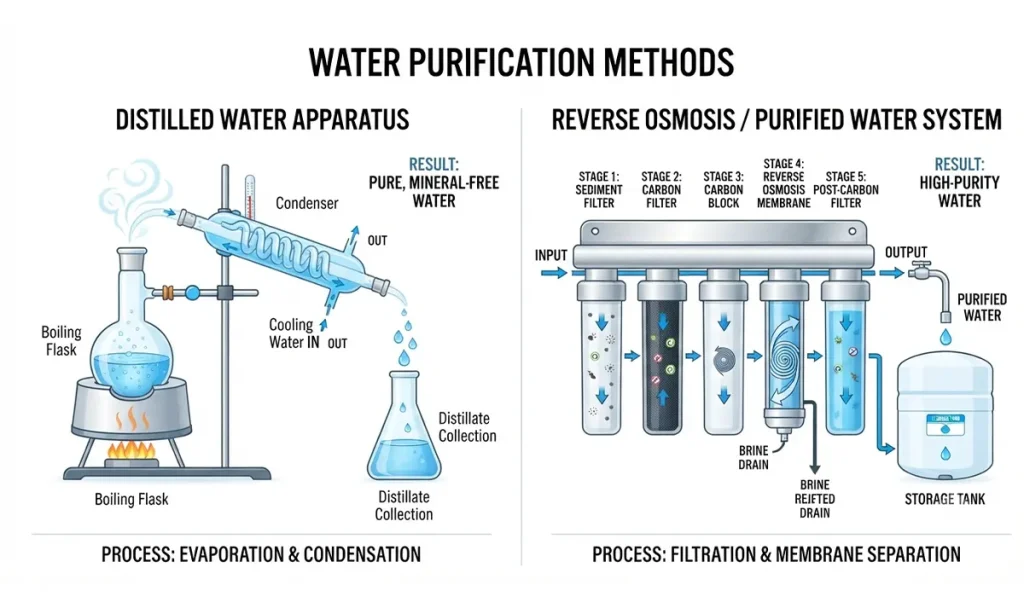
Distilled water is the “gold standard” of purity. It is produced by boiling water into steam and then condensing that vapor back into a liquid, leaving behind virtually all minerals and impurities. Purified water, however, is a catch-all term for water that has passed through advanced filtration systems like reverse osmosis, carbon filters, or UV treatment.
| Aspect | Purified Water | Distilled Water |
| Method | RO, Filtration, UV | Steam Distillation |
| Residuals | Trace minerals possible | None |
| Consistency | Varies by method | Highly consistent |
Winner: Distilled Water for sheer, unadulterated purity.
Culinary & Coffee Performance
In my kitchen, water is the primary solvent. When I brew coffee with distilled water, I often find it lacking “pop” because there are no minerals to help extract those delicate flavor compounds. Purified water, which typically retains or has some mineral content, strikes that perfect balance for a vibrant morning brew.
| Use Case | Purified Water | Distilled Water |
| Coffee Brewing | Excellent (Better extraction) | Flat (Lacks minerals) |
| Soup/Stocks | Balanced flavor | Can feel “thin” |
| Baking | Reliable | May affect yeast activity |
Winner: Purified Water for its superior flavor profile in cooking and beverages.
Appliance Health & Longevity
If you have a high-end espresso machine or a steam-heavy kitchen gadget, you know the enemy: limescale. Because distilled water has zero minerals, it simply cannot form scale. Purified water is better than tap, but depending on the filtration method, it may still contain trace amounts of calcium or magnesium.
| Maintenance Need | Purified Water | Distilled Water |
| Limescale Build-up | Minimal | Zero |
| Corrosion Risk | Low | Higher (Can be aggressive) |
| Appliance Longevity | High | Maximum |
Winner: Distilled Water for long-term protection of sensitive equipment.
My Personal Cooking Story
Last month, I decided to run a “clear broth” test. I made two identical batches of chicken stock one with standard purified water and one with distilled. The purified water batch had a rounded, natural mouthfeel. The distilled batch was incredibly clear and clean, but it felt “stripped.” It was perfect for a delicate consommé, but for a hearty chicken noodle soup, the purified water was the clear winner. I’ve stopped using distilled for everything except my espresso machine descaling sessions.
Pros & Cons
Purified Water
- Pros: Great taste; keeps essential minerals; perfect for daily hydration.
- Cons: Can still cause scale in extremely sensitive machines.
Distilled Water
- Pros: Total purity; prevents all mineral buildup; great for medical/lab use.
- Cons: Tastes “flat”; can be aggressive toward certain metal pipes; lacks minerals for flavor.
Final Verdict: The Right Choice for You
- The Daily Drinker: Go with Purified Water. It’s better for your palate and keeps your body hydrated without the flat taste of distilled.
- The Appliance Guardian: If you’re protecting a $2,000 coffee machine, Distilled Water is your best friend.
- The Culinary Artist: Use Purified for most cooking to maintain flavor depth, and reserve Distilled for ultra-delicate applications where you want zero interference.
FAQ
Can I drink distilled water every day?
Yes, it is safe to drink. However, you should ensure you are getting your daily minerals from food, as distilled water does not provide them.
Why does distilled water taste “flat”?
Taste is largely influenced by dissolved minerals. Because distillation removes all of them, the water lacks the “mouthfeel” and brightness we associate with high-quality drinking water.
Is purified water the same as filtered water?
Not always. “Purified” implies a more rigorous treatment (like RO) that meets specific low-contaminant standards, whereas “filtered” usually refers to basic carbon filtration.
Will using distilled water ruin my coffee maker?
Not necessarily, but some manufacturers warn that extremely pure water can be “hungry” and leach minerals from internal metal components over time. Always check your machine’s manual.

MD Belal is the founder and chief reviewer of KitchenSeen.com. He provides accurate information by thoroughly analyzing and comparing various types of kitchen tools and appliances. Through years of cooking experience and rigorous testing, he explains complex aspects of products in a simple way so that ordinary cooks can easily make the right decision. His main goal is to help you choose the best thing for your kitchen.