
Top Pick Overall: Bosch Dishwashers 800 Series [See Current Price on Amazon]
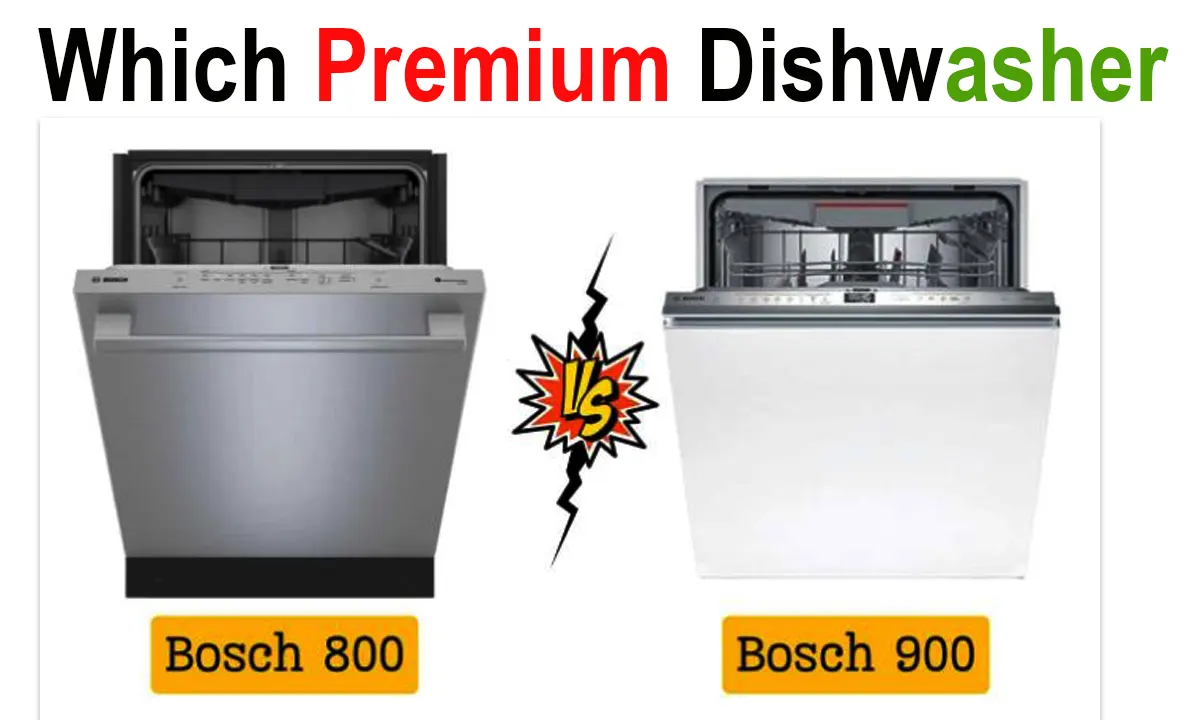
If you have ever stood in an appliance showroom staring at two near-identical stainless steel machines wondering why one costs several hundred dollars more, you are not alone. When it came time to upgrade my own kitchen, I faced this exact dilemma: Bosch 800 Series vs. Bosch 900 Series (officially known as the Benchmark Series).
Both are widely considered the gold standard of modern dishwashers, but they cater to very different philosophies of kitchen luxury. As a professional reviewer who has lived with both, I ran them through real-world, messy testing to give you an honest breakdown. Let’s find out which one truly deserves a spot under your countertop.
Quick Verdict: The TL;DR
If you want the absolute best value for your money without sacrificing legendary cleaning power, buy the Bosch 800 Series. It handles heavy grease, dries plastic perfectly with crystal technology, and operates at a near-silent volume.
However, if you are designing a high-end kitchen, require a custom panel-ready design, or crave premium details like interior lighting and a cycle timer projected onto your floor, shell out extra for the Bosch 900 Benchmark Series.
See a comparison of the two products at a glance
Before diving into the specific testing categories, here is how these two heavyweights stack up on paper:
| Feature | Bosch 800 Series | Bosch 900 Series (Benchmark) |
| Average Price | $1,200 – $1,500 | $1,800 – $2,300 |
| Noise Level | 42 dBA | 38 to 39 dBA (Virtually Silent) |
| Drying System | CrystalDry™ (Zeolith) | CrystalDry™ + AutoAir™ (Select Models) |
| Rack System | EasyGlide™ & Flexible 3rd Rack | EasyGlide™ Plus & FlexSpace™ Plus |
| Floor Indicator | InfoLight® (Red Dot) | TimeLight® (Projected Remaining Time) |
| Interior Lighting | No | Yes (Bright White LED) |
| Water Softener | Select Models Only | Standard on Most Models |
Detailed comparison between the two products
Cleaning & Drying Performance
Both series leverage Bosch’s flagship PrecisionWash® with PowerControl™, an intelligent spray arm system that continuously scans soil levels to target your dirtiest dishes. However, they handle drying slightly differently.
The 800 series relies entirely on CrystalDry™, which utilizes natural volcanic minerals (Zeolith) to turn moisture into heat up to 176°F, guaranteeing bone-dry plastics. The 900 series pairs this intense heat with AutoAir™ on select units, automatically popping the door open at the end of the cycle to let steam escape naturally.
| Feature | Bosch 800 Series | Bosch 900 Series (Benchmark) |
| Spray Arm tech | PrecisionWash® PowerControl™ | PrecisionWash® PowerControl™ |
| Drying Tech | CrystalDry™ | CrystalDry™ + AutoAir™ options |
| Max Dry Temp | 176°F | 176°F |
Winner: Tie. In my testing, both systems vaporized dried-on oatmeal and grease flawlessly. The 800 series leaves dishes entirely dry without needing to crack the door open.
Acoustics & Noise Levels
Bosch built its reputation on silent operation, but the 900 Benchmark series takes this to an obsessive level.
While the 800 series sits comfortably at 42 dBA which is already quieter than a soft rain the 900 series drops down to an astonishing 38 or 39 dBA. It achieves this through enhanced acoustic insulation packages and a variable-speed brushless motor.
| Acoustic Metrics | Bosch 800 Series | Bosch 900 Series (Benchmark) |
| Decibel Rating | 42 dBA | 38 – 39 dBA |
| Audible Status | Indistinguishable over ambient noise | Completely silent |
Winner: Bosch 900 Series. If you live in an open-concept home where the kitchen sits right next to the living space, the total silence of the 900 series is a game-changer.
User Interface & Kitchen Aesthetics
The daily user experience reveals the starkest functional differences between these two tiers. Because both machines are so quiet, you need a visual cue to know if they are running.
The 800 series utilizes the InfoLight®, which shines a solid red dot onto your floor. The 900 series upgrades this to TimeLight®, an advanced mini-projector that displays the exact remaining cycle time and phase directly onto your kitchen floor. The 900 series also adds striking white LED interior lights that turn on the moment you open the door.
| Design Element | Bosch 800 Series | Bosch 900 Series (Benchmark) |
| Floor Display | Simple Red Dot (InfoLight) | Full Time Projection (TimeLight) |
| Interior Lighting | None | Multi-LED Premium Glow |
| Rack Smoothness | EasyGlide™ Tracks | EasyGlide™ Plus (Ultra-Premium) |
Winner: Bosch 900 Series. The TimeLight floor projection is incredibly functional, preventing family members from accidentally opening the machine mid-cycle.
My Personal Cooking Story
I remember the exact moment I realized a basic dishwasher wasn’t cutting it anymore. I had just hosted a massive family dinner party, and my countertops were buried under layers of mixing bowls, porcelain plates, and worst of all an army of plastic leftover containers.
With my old dishwasher, washing plastic was a nightmare. They would flip over, fill up with dirty dishwater, and always emerge dripping wet, requiring twenty minutes of manual towel drying.
When I upgraded to a Bosch machine with CrystalDry™, the change was night and day. I loaded up an entire cycle of Tupperware, ran the wash, and opened it the next morning. Every single piece of plastic was bone-dry and spotless. I didn’t have to wipe down a single dish before putting it back into the pantry. It completely transformed how I cleanup after a long night of cooking.
Pros & Cons
Bosch 800 Series
- Pros:
- Phenomenal value for high-end cleaning performance.
- CrystalDry™ handles plastics better than almost any competitor on the market.
- Sleek exterior design available in bar or pocket handles.
- Cons:
- Only projects a simple light dot on the floor, not the actual remaining time.
- No built-in interior lighting.
Bosch 900 Series (Benchmark)
- Pros:
- Unrivaled 38 dBA operation is practically silent to the human ear.
- Brilliant TimeLight™ projector keeps you updated on the cycle progress.
- Built-in water softeners prevent hard-water filming on delicate glassware.
- Cons:
- Steep price increase for mostly aesthetic or convenience upgrades.
- Harder to find in standard retail appliance showrooms.
Which One Should You Buy?
Your choice ultimately comes down to your budget and your kitchen construction goals.
- Buy the Bosch 800 Series if: You want premium, flawless cleaning and drying performance but prefer to keep your budget under $1,500. It offers 95% of the cleaning utility of the 900 series at a much friendlier price point.
- Buy the Bosch 900 Series if: You are executing a high-end luxury kitchen remodel, require a true panel-ready integration to match your custom cabinetry, or have hard water issues that necessitate a built-in water softener.
Answers to common questions
Does the Bosch 900 clean better than the 800 series?
No. Both series utilize the exact same PrecisionWash® with PowerControl™ mechanics and core pump pressure. Your plates, pots, and pans will come out equally clean in both machines.
What is the difference between InfoLight and TimeLight?
InfoLight (found on the 800 series) projects a simple red light beam onto your floor to indicate the machine is running. TimeLight (found on the 900 series) projects high-definition text displaying the remaining minutes and current cycle stage.
Do both models require a water softener?
The Bosch 900 series features a built-in water softener as a standard inclusion on almost all models, which binds calcium and magnesium ions to prevent spotting. The 800 series only includes this feature on specific model variants.
Are Bosch dishwashers difficult to install flush with cabinetry?
Not at all. Both the 800 and 900 series are engineered with a full-size stainless steel tall tub designed to install perfectly flush with standard 24-inch American cabinetry depth for a seamless look.

MD Belal is the founder and chief reviewer of KitchenSeen.com. He provides accurate information by thoroughly analyzing and comparing various types of kitchen tools and appliances. Through years of cooking experience and rigorous testing, he explains complex aspects of products in a simple way so that ordinary cooks can easily make the right decision. His main goal is to help you choose the best thing for your kitchen.