
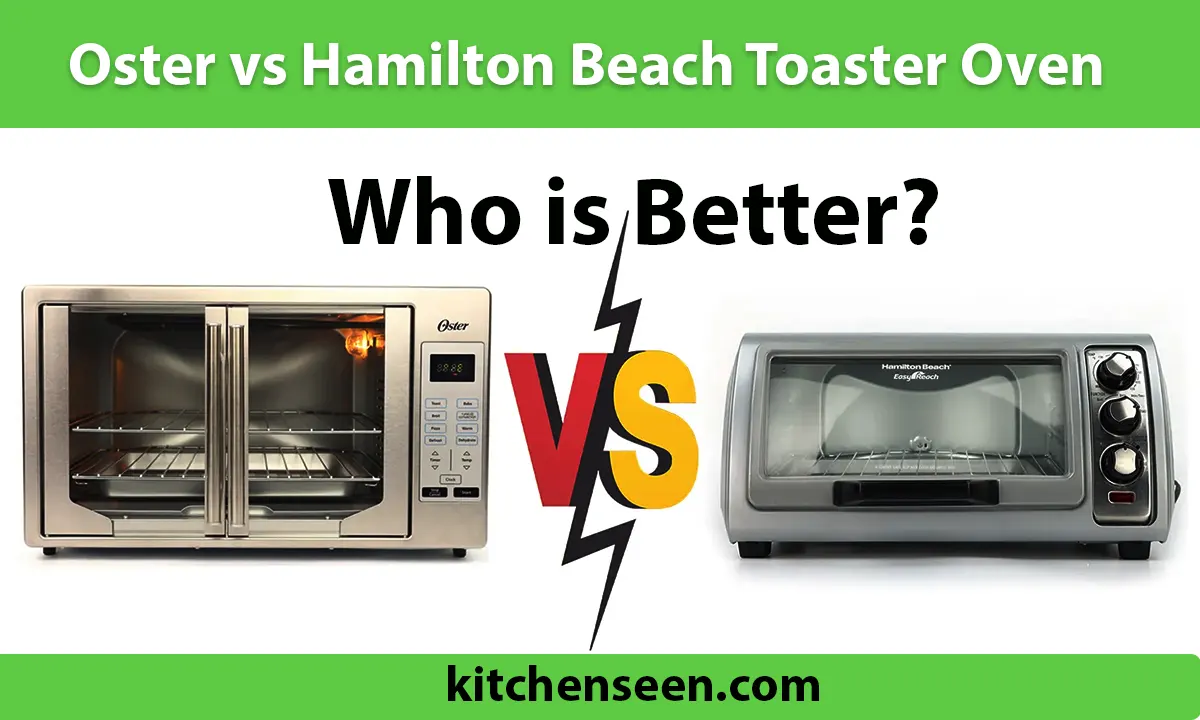
Choosing the perfect countertop appliance can instantly transform your daily kitchen workflow. If you are stuck deciding between an Oster vs. Hamilton Beach toaster oven, you are likely looking to supplement your full-sized range, speed up meal prep, or maximize a tight kitchen space without sacrificing cooking capacity.
While both brands are giants in the small appliance market, they target completely different culinary personas. One acts as a heavy-duty, mini conventional oven replacement, while the other focuses on daily, frictionless convenience and budget-friendliness.
Check Latest Price and Offer at Amazon
Which Should You Choose?
- Choose Oster if: You want a heavy-duty, large-capacity appliance to replace your main oven for serious baking, roasting whole chickens, and high-velocity air frying. It feels premium, offers precise digital controls, and is built to last.
- Choose Hamilton Beach if: You have a small kitchen, hate cleaning messy downward-swinging glass doors, and want an affordable, safe, and easy-to-use oven for daily toast, bagels, and quick snacks.
Oster vs Hamilton Key Specifications at a Glance
To help you see how these two kitchen powerhouses stack up, we compiled their core specifications, internal capacities, and notable engineering traits below:
| Feature / Metric | Oster Countertop Ovens | Hamilton Beach Toaster Ovens |
| Primary Advantage | French doors, heavy-duty build, true convection, multi-rack air frying | Easy Reach roll-top doors, budget-friendly, compact footprints, safer access |
| Top Flagship Models | Oster French Door Digital Oven / Oster RapidCrisp Air Fryer Oven | Hamilton Beach Easy Reach (31126R / 31127) & 31103 Countertop Convection Oven |
| Heating Elements | Premium Quartz (on flagship models) or heavy-duty stainless steel | Standard Calrod or traditional metallic elements |
| Power Consumption | 1400W – 1800W (Higher power, faster preheating) | 1200W – 1500W (Energy-efficient for smaller tasks) |
| Capacity Range | Extra-Large (Fits 6-8 slices of toast, a 9×13-inch pan with handles, or a 6 lb chicken) | Compact to Large (Fits 4–6 slices of toast, or up to a 12″ pizza in large models) |
| Control Interface | Digital touchpads with precise presets on premium models | Durable manual knobs (analog dials) on entry-to-mid tiers |
| Material Safety | Teflon-free/PFOA-free ceramic coatings; Aluminized steel interior | Stainless steel/Aluminized steel accessories (BPA-free plastic accents) |
| Price Range | Mid-tier to Premium ($100 – $250+) | Budget to Mid-tier ($45 – $140) |
| Warranty & Lifespan | 1 to 3 Year Limited Warranty (Avg. lifespan: 4–6+ years) | 1 Year Limited Warranty (Avg. lifespan: 2–4 years) |
Testing Both Brands in a Real Kitchen

Check Latest Price and Offer at Amazon
Paperwork specs don’t always tell the full story. To give you the most accurate advice, we put flagship models from both brands through real-world kitchen testing baking cookies, roasting chicken, and toasting dozens of bread slices. Here is what it actually feels like to live with these two appliances on a daily basis.
The Oster Experience: A Mini Wall Oven Replacement
When we first unboxed the Oster French Door Countertop Oven, its sheer size felt a bit intimidating. However, it quickly became the MVP of our kitchen. In fact, we stopped preheating our giant, energy-consuming traditional wall oven entirely. The Oster handled everything from roasted five-pound chickens to Sunday batches of chocolate chip cookies with incredible speed and even heat distribution.
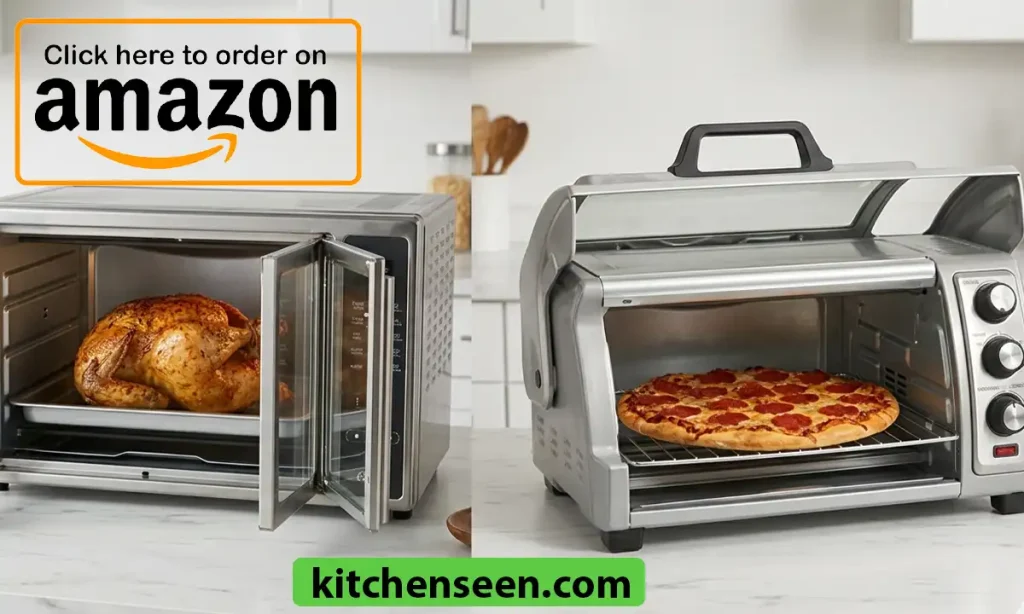
The single-pull French door mechanism isn’t just a visual gimmick—it genuinely saves you from potential wrist burns when transferring heavy baking pans, as opening one door smoothly swings both open.
Real-World Testing Note: Because the doors meet in the center, you might notice a tiny bit of heat escaping right at the seam during long, high-heat roasts. Ensure you push the doors firmly until they click; otherwise, a minor gap might remain, letting out precious heat. Furthermore, if you are baking delicate pastries like soufflés, the powerful convection fan can sometimes shift the batter if it is not centered properly.
The Hamilton Beach Experience: The King of Convenience
On the flip side, we spent a few weeks using the Hamilton Beach Easy Reach model in a much tighter apartment kitchen setup. The first real takeaway was pure relief regarding the cleanup process.
Anyone who has owned a traditional toaster oven knows how annoying it is when melted cheese or grease drips directly onto a downward-swinging door, baking into an immovable crust. With Hamilton Beach’s roll-top mechanism, that problem vanishes completely. The door flips up and away, keeping the glass clean and giving you wide-open access to your food.
It is also incredibly user-friendly for households with children or seniors, as the tucked-away door significantly reduces the risk of accidental wrist burns.
Real-World Testing Note: While we did notice that toast was occasionally a bit darker near the back heating elements compared to the front, its sheer day-to-day usability, low maintenance, and small footprint were hard to beat for quick morning routines.
Head-to-Head Performance Analysis
1. Toasting and Baking Consistency
When evaluated for shade uniformity across multiple slices of bread, Hamilton Beach provides decent micro-control for basic toast via its manual color-shade timers. However, you may occasionally need to rotate your food for a perfectly even shade if you load the rack to its maximum 6-slice capacity.
For baking dense dishes, roasting meats, or air-frying snacks, Oster wins hands down. Its robust Turbo Convection technology and quartz elements eliminate raw internal spots, creating faster browning, crispier textures, and excellent moisture retention.
2. Structural Durability and Thermal Maintenance
Oster utilizes thick stainless-steel chassis structures with heavily insulated walls that retain heat exceptionally well. Hamilton Beach units use lighter-gauge sheet metal alloys to maximize interior space while keeping the physical product lightweight and affordable.
Consequently, Oster manages long-term thermal retention much more effectively. It won’t struggle to hold a steady 400°F temperature during extended use, whereas the Hamilton Beach exterior can feel quite hot to the touch after 30 minutes of baking.
3. Kitchen Clearance and Space Management
Hamilton Beach is the clear winner for tight kitchens. Since its door rolls upward, it requires zero frontal countertop clearance when open. Oster’s French doors swing outward horizontally, requiring clear space on both the left and right sides of the machine, which can easily crowd a small countertop or bump into nearby coffee makers.
The Cleaning & Maintenance Battle
When it comes to daily maintenance, these two brands offer completely different experiences:
- Hamilton Beach (The Winner): The Roll-Top door means no food ever drips onto the glass when you pull the rack out. Even better, on models like the Hamilton Beach 31127, the entire glass door can be unlatched and lifted off completely to be washed in the sink. The front-access crumb tray slides out effortlessly from the bottom.
- Oster (Requires More Effort): While Oster features a removable crumb tray and a PFOA-free interior coating that wipes down easily, cleaning the center-opening French doors can be slightly tedious. Grease can sometimes accumulate in the middle seam or along the door tracks, requiring a detailed wipe-down with a microfiber cloth.
Food Performance Direct Matchup
- Toast & Bagels: Hamilton Beach wins for speed and simple dial controls for a quick morning rush.
- Frozen Pizza: Tie. Both accommodate a 12-inch pizza easily, though Oster cooks the center slightly faster due to higher airflow.
- Whole Roasted Chicken: Oster wins easily due to superior vertical clearance, heavy-duty racks, and quartz heating elements.
- Air Frying & Crisping: Oster wins with its high-velocity dedicated fans; Hamilton Beach’s convection is milder and takes longer to crisp.
Deep Dive: Pros and Cons
Oster Countertop Convection Ovens
The Pros:
- Superior Heating: Advanced quartz heating elements heat up to 40% faster than standard elements.
- True Air Frying: High-velocity fans push hot air forcefully, mimicking a standalone air fryer and cutting cooking times by up to 30%.
- Enormous Interior Volume: XL models easily accommodate a family-sized 9×13-inch baking pan with handles.
- Smart Digital Interface: Premium models feature precise digital control screens with highly accurate temperature tracking.
The Cons:
- Massive Countertop Footprint: Demands substantial space, plus you need 4–6 inches of rear and side clearance due to high heat output.
- Center-Door Heat Seepage: The unique French doors can vent a small amount of heat through the center seam if not closed firmly.
- Higher Noise Level: When the air fry fan is running, it can be quite loud compared to standard models.
Hamilton Beach Toaster Ovens
The Pros:
- Revolutionary Roll-Top Door: Prevents melted cheese, grease, and crumbs from dripping onto the door glass.
- Safer, Accessible Design: Great for kids and seniors; the open door leaves the front completely unobstructed.
- Incredibly Easy Maintenance: The glass door is completely out of the way when open, and on select models, it lifts off for easy sink washing.
- Unbeatable Value for Money: Fantastic everyday performance for under $100 ideal for quick meals and personal snacks.
The Cons:
- Simpler Insulation: The exterior walls get quite hot to the touch during long baking cycles, requiring careful placement away from plastics or cords.
- Hard to Clean Top Interior: Because the roll-top door rolls into the top of the oven, cleaning grease off the inner ceiling can be a bit awkward.
- Basic Feature Sets: Relies mostly on manual analog dials, which require a bit of guesswork compared to digital screens.
FAQ:
Can an Oster toaster oven replace a regular kitchen oven?
Yes. Extra-large Oster French Door and RapidCrisp models can successfully handle up to 80% of standard baking, roasting, and broiling tasks while saving time and lowering household energy usage compared to a full-sized conventional oven.
Does Hamilton Beach make a convection-enabled toaster oven?
Yes. Hamilton Beach offers select models with optional convection settings (such as the Hamilton Beach 31103). However, their hallmark feature remains the space-saving Easy Reach roll-top door design rather than high-velocity, dedicated air frying.
Will these ovens fit under standard kitchen cabinets?
Hamilton Beach Roll-Top models fit beautifully under standard cabinets because the door retracts upward without hitting the cabinet bottom. Oster XL models, however, stand much taller and radiate significant top heat. You must ensure you have at least 4 to 6 inches of open clearance above an Oster oven to prevent heat damage to your upper cabinetry.
Are these toaster ovens energy efficient?
Absolutely. Both Oster and Hamilton Beach toaster ovens heat up much faster than a standard conventional wall oven. Because they have a smaller cavity to heat, they use roughly 30% to 50% less energy for quick meals, making them great for keeping your kitchen cool in the summer and saving on electricity bills.
Are these toaster ovens non-toxic and PFOA/PTFE free?
Yes, both brands are safe for daily cooking. The interior walls and included wire racks/baking pans are primarily made of standard stainless steel or aluminized steel, which naturally contain no PFOA, PTFE, or Teflon. For models featuring non-stick interior coatings, Oster uses PFOA/PTFE-free ceramic coatings. Any plastic components used on handles or knobs are strictly BPA-free.
Why are the power cords on these toaster ovens so short?
By safety standards, almost all major toaster oven brands (including Oster and Hamilton Beach) provide a short power cord (usually 2 to 3 feet). This is an intentional design feature to reduce the risk of someone tripping over the cord or the cord accidentally touching the hot exterior walls of the oven.
Which brand lasts longer on average?
Oster holds the distinct advantage in terms of longevity. Thanks to its heavy-duty stainless steel frame and premium heating components, an Oster oven typically lasts 4 to 6+ years with heavy use. Hamilton Beach models generally offer a reliable, trouble-free lifespan of 2 to 4 years.
The Final Verdict: Which One Should You Buy?
- Buy the Oster Convection Oven if: You plan to use it as a primary cooking device for baking pastries, roasting whole meats, serious air frying, or prepping meals for a family of 3 or more. The culinary depth, heavy-duty insulation, and even heat distribution easily justify the higher initial investment.
- Buy the Hamilton Beach Oven if: You have limited counter space, live in a smaller apartment, hate wiping down greasy doors, want something safer for family use, and need a reliable, affordable appliance for simple daily tasks like morning bagels, personal snacks, and reheating dinner dishes.

MD Belal is the founder and chief reviewer of KitchenSeen.com. He provides accurate information by thoroughly analyzing and comparing various types of kitchen tools and appliances. Through years of cooking experience and rigorous testing, he explains complex aspects of products in a simple way so that ordinary cooks can easily make the right decision. His main goal is to help you choose the best thing for your kitchen.